What is blockchain?
How blockchain technology works
All your burning questions about blockchain technology. How does blockchain work and what problems does it solve? Find out in this easy guide.
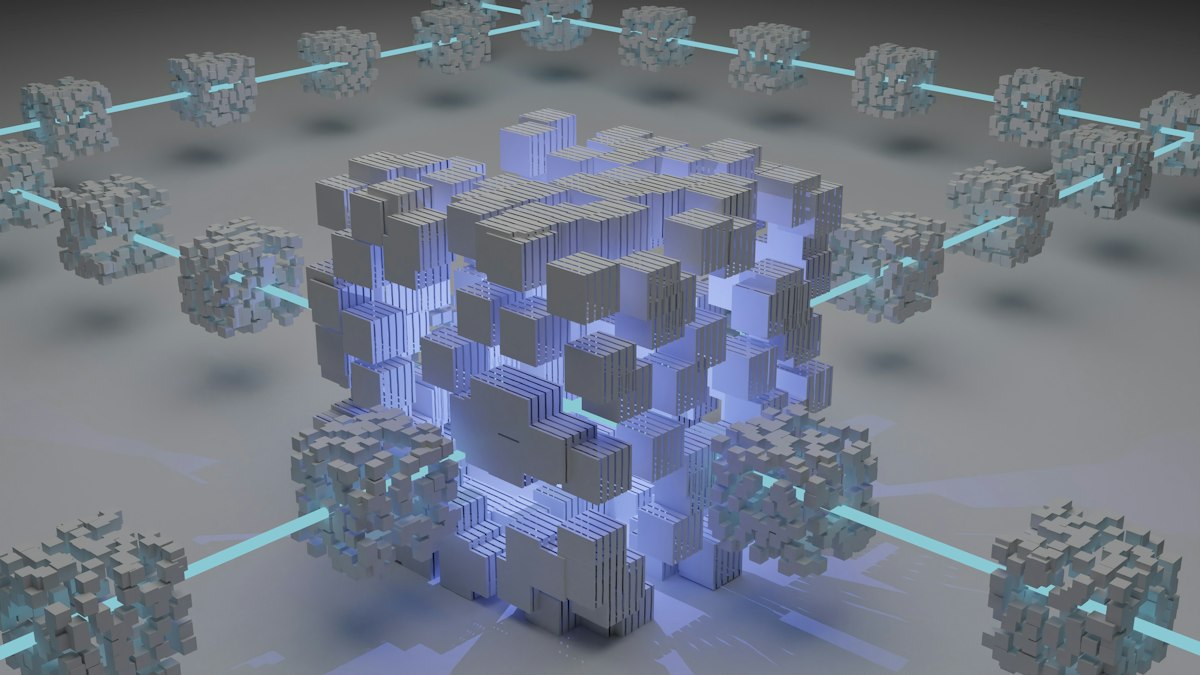
Blockchain technology is used to validate and store information digitally on what's known as a "distributed ledger". Since it's based on a peer-to-peer network, blockchain removes the need for a central authority — it's a decentralized, self-organizing structure.
While most commonly associated with cryptocurrency, blockchain technology has a wide range of applications thanks to its security and efficiency. This beginner's guide explains what the technology is, how it works, and ways it can be used beyond cryptocurrency.
What is blockchain?

A blockchain as a decentralized network
Blockchain is a distributed ledger used to validate and record information digitally. A blockchain ledger is essentially a database that's spread and shared across multiple peer-to-peer devices ("nodes") which are, in turn, spread across multiple people, geographies, time zones, and so on.
All of these computers can access the data and make updates or verifications in real time, visible to everyone – almost like a shared document. Unlike a shared document, though, none of the information can be changed or deleted once it's stored on the blockchain.
Why is it called a blockchain? Because the digital ledger is made up of virtual blocks of data which are, you guessed it, chained together.
Blockchains can record and validate all sorts of transactional data. While they are currently most used for cryptocurrency transactions, they can be used for healthcare records, supply chain transactions, property information – pretty much anything.
What is a blockchain's purpose?
The purpose of a blockchain is to create an immutable record of information that's independently verified by, and distributed across, multiple sources.
The fundamental difference between a blockchain and a typical database is the way that the data is stored. Where a typical database may use a table, data is stored on the blockchain in blocks, which are organized chronologically. When one block is full, it's chained onto the last one, and the next one starts getting filled, and so on and so forth.
This means that the data is locked in a linear timeline that cannot be altered or undone, which makes it an exceptionally hard system to hack. This is why the main purpose of a blockchain tends to be to record transactions, because its decentralized nature and method of storing data makes it very secure.
The history of blockchain

A timeline of the history of blockchain technology
The first description of a cryptographically-secured chain of blocks was published by Stuart Haber and W. Scott Stornetta in 1991. It wasn't until 2008, though, that the original model for a blockchain was released in a whitepaper by the Bitcoin developer(s), working under the pseudonym Satoshi Nakamoto. A year later, the Bitcoin blockchain was implemented by Nakamoto as the distributed ledger technology for Bitcoin transactions.
For five years, the only application of blockchain technology was as the digital ledger for Bitcoin transactions. In 2014, the blockchain technology was finally separated from digital currency, and developers began exploring its potential for other applications. Later, the Ethereum blockchain emerged, including computer programs in the blocks in the form of game-changing smart contracts.
How does a blockchain work?
Here are the three main things you need to know.
Types of blockchain networks
Public blockchain networks
Permissionless, open, and fully decentralized. All nodes have equal rights to create and validate blocks. Most commonly used for exchanging and mining cryptocurrencies.
Private blockchain networks
Controlled by a single organization and requires nodes to have permission. A central authority decides who can be a node and the rights each node has. Only partly decentralized.
Consortium blockchain networks
Requires permissions, but is governed by a group of businesses. Has higher levels of decentralization than private blockchains, but not as much as public blockchains.
Hybrid blockchain networks
A combination of public and private blockchains — centrally governed, but requires a public blockchain to perform certain transaction validations.
Consensus mechanisms
Blockchains require a consensus mechanism to function — a protocol that helps verify and validate transactions. There are two main types:
⛏️ Proof of Work (PoW)
Transactions are validated by computers racing to solve a complex mathematical problem. Very secure, but requires huge amounts of energy.
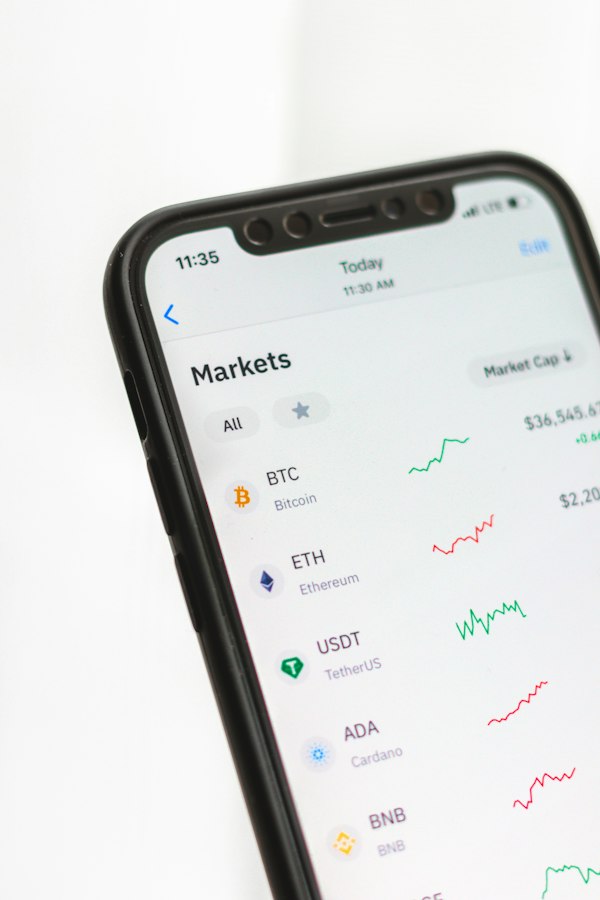
In PoW, miners compete to find a solution to earn block rewards
🔒 Proof of Stake (PoS)
Validators "stake" tokens to participate. Requires far less computing power than PoW — a more energy-efficient alternative.

In PoS, validators participate by staking tokens
Key concepts: Blocks, Miners & Nodes
Blocks
Each block contains a batch of transactions, along with a timestamp and a cryptographic hash of the previous block. This chain of hashes links all blocks together, making it impossible to alter past records.
Miners
Miners are network participants that compete to solve complex mathematical puzzles to validate transactions and add new blocks to the blockchain. In exchange, they earn block rewards.
Nodes
Nodes are individual computers that participate in the blockchain network. They store copies of the blockchain and help validate and relay transactions across the network.
The blockchain transaction process
Here's a simplified look at how a transaction is processed and recorded on a blockchain:
Transaction initiated
A user initiates a transaction — e.g., sending cryptocurrency to another address.
Broadcast to the network
The transaction is broadcast to a peer-to-peer network of nodes.
Validation
Nodes validate the transaction using known algorithms.
Block formation
The verified transaction is combined with other transactions to create a new block of data.
Block added to the chain
The new block is added to the existing blockchain. This is permanent and unalterable.
Transaction complete
The transaction is complete and a permanent record now exists on the blockchain.
Key properties of blockchain
Immutability
Once data is recorded on the blockchain, it cannot be changed or deleted. This creates a permanent audit trail.
Decentralization
No single entity controls the blockchain. It is maintained by a distributed network of nodes around the world.
Transparency
All transactions are visible to participants on the network, creating accountability without revealing personal data.
Security
Cryptographic hashing and consensus mechanisms make blockchain extremely resistant to fraud and hacking.
Blockchain use cases beyond crypto
Blockchain technology is being applied across many industries:
Cryptocurrency
Bitcoin, Ethereum, and thousands of other digital currencies use blockchain as their underlying ledger.
Smart Contracts
Self-executing contracts with terms written directly into code, enabling trustless automation.
Healthcare
Secure storage and sharing of medical records while maintaining patient privacy.
Supply Chain
Track goods from manufacturer to consumer with an immutable audit trail.
Voting
Tamper-proof digital voting systems for elections and governance.
NFTs & Digital Art
Proof of ownership and authenticity for digital assets and collectibles.
Advantages & Disadvantages
✅ Advantages
- ✓ Highly secure and tamper-resistant
- ✓ Transparent and auditable
- ✓ Eliminates need for intermediaries
- ✓ Reduces transaction costs
- ✓ Enables trustless transactions
- ✓ Immutable record keeping
❌ Disadvantages
- ✗ High energy consumption (PoW)
- ✗ Slow transaction speeds vs. centralized systems
- ✗ Difficult to scale
- ✗ Complexity for non-technical users
- ✗ Irreversible transactions (errors can't be undone)
- ✗ Regulatory uncertainty
Summary
Blockchain is a distributed, decentralized ledger that records transactions in a secure, transparent, and immutable way. It was first developed as the underlying technology for Bitcoin but has since expanded to power a huge range of applications — from smart contracts and NFTs to supply chain management and healthcare.
Understanding blockchain is key to understanding the future of finance, technology, and the internet — often referred to as Web3.
Cookie Policy
We use cookies to improve your experience. By continuing to use the site, you accept our cookie policy.