What is Bitcoin mining?
Mining Bitcoin explained
What you need to know about how Bitcoin mining works, the incentives it provides to miners, its risks, and why it's necessary.

Since its inception in 2009, Bitcoin has disrupted money and commerce by introducing a decentralized payment method. Unlike fiat currencies, Bitcoin's issuance happens algorithmically over a distributed ledger — the blockchain.
This makes network security more challenging than in traditional finance. In the absence of a central authority, the network needs a way to verify legitimate transactions and eliminate fraudulent ones.
Enter Bitcoin mining: the process of securing the network, preventing double-spending, and regulating BTC circulation. Anyone can participate — and despite its challenges, mining has been a lucrative pursuit for those with the right resources.
Understanding Bitcoin
Bitcoin, which launched in 2009, is a digital-native crypto asset with the highest market capitalization of any cryptocurrency. It was created under the pseudonym Satoshi Nakamoto and described as an "electronic peer-to-peer cash system" in its famous white paper.
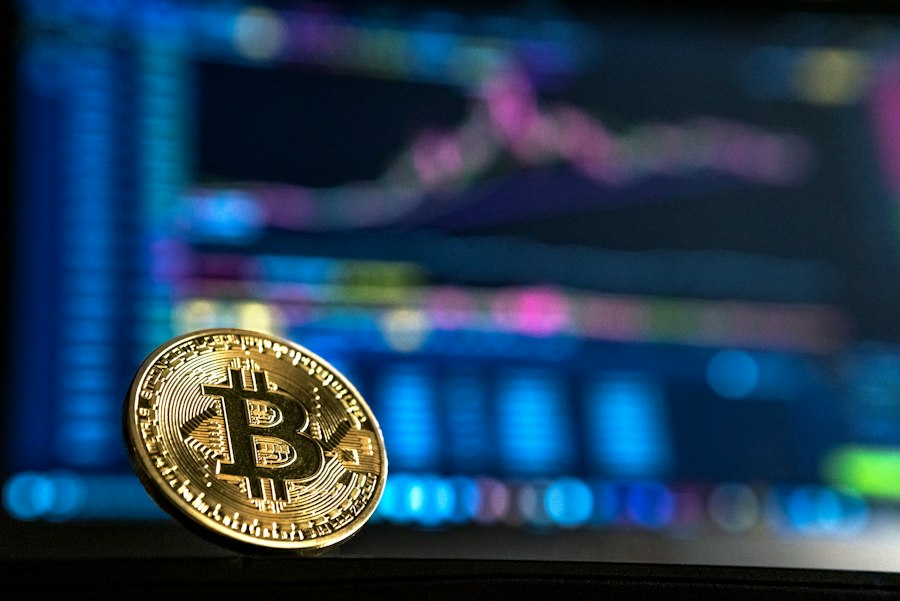
The Bitcoin white paper established a peer-to-peer electronic cash system
Bitcoin is created, stored, and traded on a distributed ledger — the blockchain. The network is immutable, meaning new transactions are combined with previous block data to form a stable, permanent chain. This network is secured by Bitcoin miners who verify and finalize transactions.
What is Bitcoin mining?
Bitcoin mining is the process by which new Bitcoins enter circulation as a reward for miners using computational power to validate transactions. It uses a Proof of Work (PoW) consensus mechanism — the oldest and most secure consensus algorithm.
In a PoW model, miners compete to solve arbitrary mathematical puzzles, using increasing amounts of computing power to produce a new block. This is costly and involves high electricity consumption. The miner who solves the puzzle first gets to add the new block to the blockchain and receives newly minted Bitcoin as a reward.
Bitcoin mining secures the network, prevents double-spending, and regulates BTC circulation
Why does Bitcoin need miners?
The Bitcoin network has two main objectives:
📡 Transmit transaction data
Every node in the network has access to a full copy of the blockchain ledger, making data transmission relatively straightforward.
🛡️ Verify transactions & prevent double-spending
Without miners, there would be no way to prevent someone from fraudulently using the same Bitcoin for multiple payments.
A digital currency like Bitcoin is essentially a computerized document — prone to duplication. Without a robust security mechanism, counterfeiting coins or double-spending would be trivial. Bitcoin mining solves this by creating and adding new blocks to the blockchain, making fraud computationally infeasible.
The Bitcoin mining process
Here's a step-by-step breakdown of how Bitcoin mining actually works.

From the Bitcoin whitepaper: a basic diagram of transactions and digital signatures
Transactions are broadcast
When a user sends Bitcoin, the transaction is broadcast to the global network of nodes.
Transactions are bundled
Miners collect unconfirmed transactions from the mempool and bundle them into a candidate block.
Cryptographic puzzle begins
Miners compete to find a 64-digit hexadecimal "nonce" less than or equal to the target hash using the SHA-256 algorithm.
Puzzle solved
The first miner to find the correct nonce broadcasts their solution to the network for verification.
Block added to the chain
Once verified by other nodes, the new block is permanently added to the Bitcoin blockchain.
Miner is rewarded
The winning miner receives the block reward (newly minted BTC) plus all transaction fees in the block.
⏱️ Block time: Bitcoin miners successfully create one block roughly every 10 minutes. The network automatically adjusts mining difficulty every 2,016 blocks (~2 weeks) to maintain this pace, regardless of how many miners are active.
Why mine Bitcoin?
Miners are rewarded with two types of income for their work:
₿ Block Reward
The primary incentive — newly minted Bitcoin awarded to the miner who successfully adds a block. This reward halves approximately every 4 years (every 210,000 blocks), a mechanism known as the Bitcoin Halving.
💸 Transaction Fees
Every transaction on the Bitcoin network includes a small fee paid by the sender. Miners collect all fees from transactions included in their block — a revenue stream that will grow in importance as block rewards diminish.
Bitcoin Halving
The block reward halves every ~4 years, controlling Bitcoin's supply.
Genesis block mined
1st Halving
2nd Halving
3rd Halving
4th Halving
5th Halving (projected)
Bitcoin has a fixed maximum supply of 21 million BTC. The last Bitcoin is estimated to be mined around 2140.
Types of Bitcoin mining
There are several ways to participate in Bitcoin mining:
Solo Mining
A single miner uses their own hardware to compete for block rewards alone. High risk, high reward — chances of success are very low without massive computing power.
Pool Mining
Miners combine their computing power to increase the chances of solving a block. Rewards are split proportionally. Lower variance, more consistent payouts.
Cloud Mining
Users rent mining power from a third-party data center. No hardware required, but profits can be lower and scams are common in this space.
What do you need to mine Bitcoin?
Here are the key requirements to get started with Bitcoin mining:
Mining Hardware (ASIC)
Application-Specific Integrated Circuits (ASICs) are purpose-built for Bitcoin mining. Popular models include Bitmain Antminer and MicroBT WhatsMiner.
Cheap Electricity
Mining consumes massive amounts of power. Miners need access to cheap (ideally renewable) electricity to stay profitable.
Cooling System
Mining rigs generate significant heat. Proper cooling infrastructure is essential to prevent hardware damage.
Reliable Internet
A stable internet connection is needed to stay connected to the Bitcoin network and submit solutions quickly.
Mining Software
Software like CGMiner or BFGMiner connects your hardware to the network or mining pool.
Bitcoin Wallet
You need a Bitcoin wallet address to receive your block rewards and transaction fees.
Advantages & Disadvantages
✅ Advantages
- ✓ Earns newly minted Bitcoin as reward
- ✓ Transaction fees provide additional income
- ✓ Supports the Bitcoin network's security
- ✓ Can be profitable with cheap electricity
- ✓ Contributes to decentralization
❌ Disadvantages
- ✗ Extremely high energy consumption
- ✗ Expensive ASIC hardware required
- ✗ Increasing difficulty over time
- ✗ Rewards halve approximately every 4 years
- ✗ Competitive — dominated by large operations
- ✗ Environmental concerns from carbon footprint
Summary
Bitcoin mining is the process by which new BTC enters circulation and the network remains secure. Miners use powerful computers to solve cryptographic puzzles, validate transactions, and add new blocks to the blockchain — earning Bitcoin rewards in return.
While mining can be profitable, it requires significant upfront investment in hardware and electricity. The Bitcoin Halving — which cuts the block reward in half every ~4 years — ensures Bitcoin's supply remains capped at 21 million coins, making it inherently deflationary by design.
Cookie Policy
We use cookies to improve your experience. By continuing to use the site, you accept our cookie policy.